Regardless of the marketing strategies we want to use to achieve our ranking goal, it's worth evaluating whether they comply with the Google guidelines requirements. If you want to discover how to know if my website is penalized by google, this post interests you.
What are Google penalties?
If you're reading this you're surely asking yourself: - how to know if my website is penalized by google. But first, it's essential that you understand what Google penalties are.
A Google penalty is defined as the way to "punish" those who make a mistake, a failure or have had a bad-faith attitude with improper actions (Black Hat SEO).
You must always keep in mind that Google gives extra value to site naturalness and to user opinions. Google takes into account sites that practice good natural SEO, ranking them above those who practice Black Hat SEO techniques.
At the same time, its purpose is like that of any other company providing an online service; satisfying the customer through original content, quality and timely to what they're searching for.
What types of Google penalties exist?
As we move forward, the penalties Google implements also evolve and change over time. However, it's worth mentioning that Google updates daily, but most of the time, we don't notice these changes.
Today there are two ways to penalize, these ways are based on "how penalties are applied and detected".
Algorithmic penalty
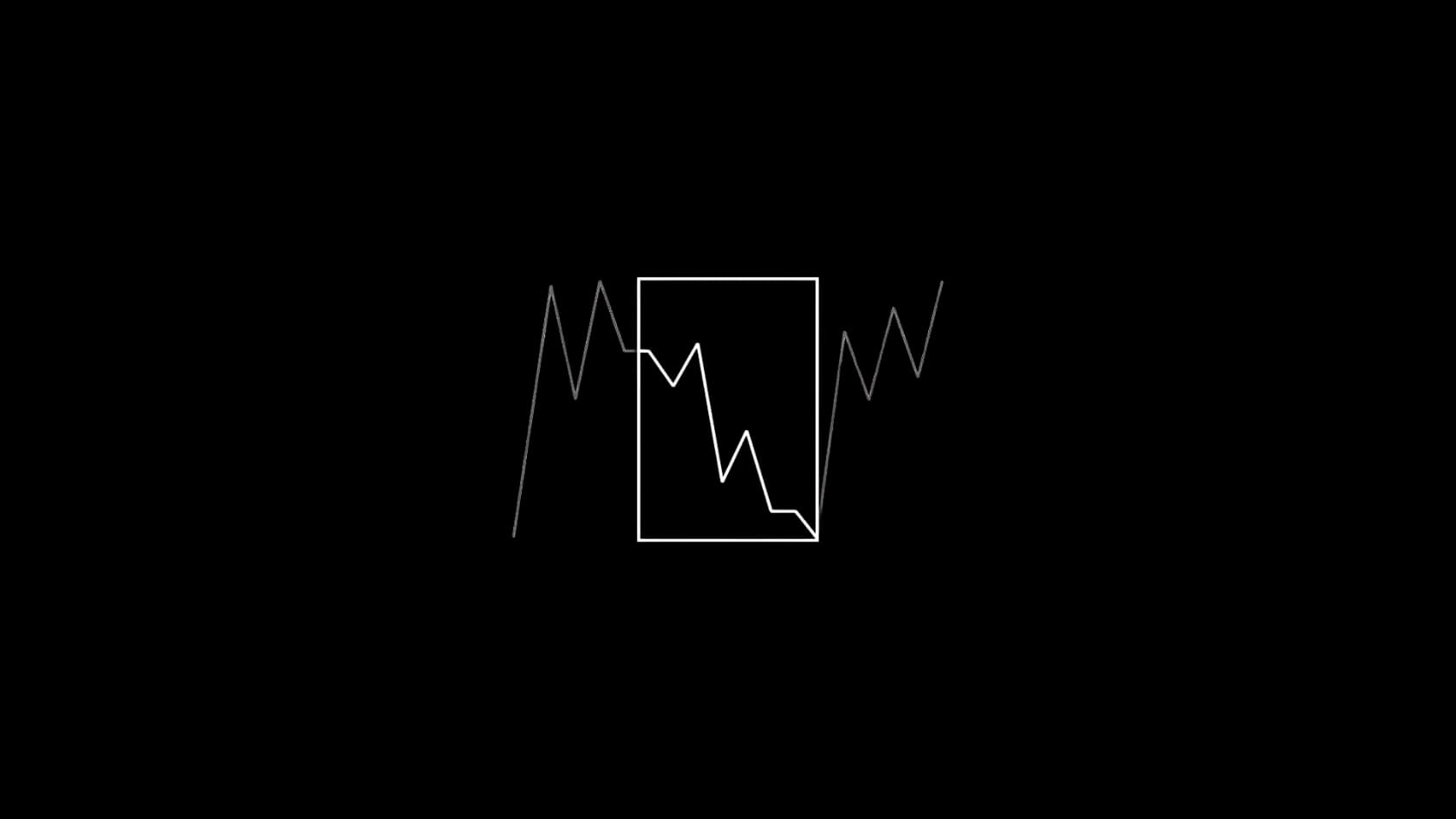
This type of penalty is carried out automatically and occurs as a consequence of some change in the algorithm designed to classify websites according to higher/lower value or relevance. It's characterized by a decrease in the SERPs, making your website drop in positions leading to the decrease in organic traffic.
The most common penalties of this style are:
Google Penguin penalty:
It's known as "Penguin" and focuses on the inspection of external links pointing to our website to increase our authority. If they're harmful or bought (not natural) and don't have a good origin, we'll be penalized (although Google is increasingly ignoring toxic backlinks).
These links must meet a series of characteristics:
- Link quality: there must be a balance between high and low quality links. They can't all be of the same quality type (especially high), you must have a middle ground.
- Link frequency: you shouldn't receive many links in a short time, and at the same time, there shouldn't be an abrupt decrease in links.
- Link diversity: links must be obtained from all kinds of sources: forum comments, blogs, etc. That guarantees reliability, although most of these backlinks should come from sites with the same theme.
Google Panda penalty:
Product of an update dedicated to monitoring content in terms of quality.
The penalty depends on:
- Poor content, "thin content": offers poor content quality for being short and superficial. It's not what the user is looking for.
- Lack of coherence in writing: has grammar, spelling and syntax errors.
- Content is duplicated or copy-paste has been detected, which is the same as plagiarism.
Comparing both types of penalty we can say that Panda focuses on the components the website generates or acquires that prevent its correct use; meanwhile, Penguin handles the search for those unnatural links that were paid for or built without the editor's approval.
Manual penalty
This penalty has a difficult removal for being the most serious. This penalty is performed directly by a worker of the Google search engine once they receive a SPAM report, some alert signal that some user may emit or just with the evidence of some violation of Google's Terms of Service.
It's characterized by sending a notification in Search Console where it notifies you that you've been removed from Google's index. Upon receiving this type of notification, you must correct the error and contact Google through search console to review your changes and if approved place it on the search engine results page again.

Google's algorithm is increasingly smarter, therefore, manual penalties are becoming obsolete.
How to know if Google has penalized me?
The way to know if you've been penalized or not is by checking that:
- Your domain hasn't disappeared from Google's index. To check this place in the search "site:www.tudominio.com".
- Your website's Ranking hasn't dropped to zero.
To know if google has penalized me, ironically you must have complied with some of the criteria that are looked down upon by Google. Some of the most common and focal are:
- You have some duplicate content.
- You acquired low-quality links.
- There are bad user experiences either from comments or because they complained directly to Google.
- You have a high level of advertising.
- Load speed is slow.
- You generate too many error pages.
- You exceeded in the proper use of keywords to gain notoriety.
- There's hidden content.
- You've done SPAM.
- You bought or sold links.
- You exceeded in link exchange.
- You created artificial links.
- You plagiarized copying content from other websites.
- You did negative SEO (These are unethical techniques called "black Hat" whose only goal is to sabotage the ranking of the closest competitor so theirs drops and ours rises).
If the penalty was manual, you'll receive a notification in Search Console. One of the best ways that answer how to know if my website is penalized by google.
In the case of automatic penalty you must pay attention to your website's traffic level, although in both types of penalty traffic is progressively and suddenly lost until it disappears from the SERPs.
Other signals that indicate your website is penalized are:
- Your previously ranked keywords drop in position in the search engine.
- Other pages of your domain don't appear in Google results.
On the other hand, an important fact that can help you know if Google made an update (which implies you may have been penalized) is verifying the information on its official Twitter account.
Why may Google have penalized me?
The actions Google will take on our website will depend on the violation we've committed. With various reasons why Google can penalize us, the most common are:
Links:
It's the most common penalty cause. It occurs when Google detects there's an excess in links, both outgoing and incoming:
Outgoing Links
Having an excess of outgoing links is considered a sign of buying or exchanging them. At the same time, creating a large number of external links directed to another domain on the same website has the consequence of disappearing from Google results, regardless of whether these links are nofollow type.
Incoming Links (backlinks)
It's quite common because websites with some penalty can link to you and that would penalize you too. That's why you have to be especially careful with the links we get. Remember to stick correctly to link Building techniques to not fall into penalties.
Malicious content
This malicious content is nothing other than viruses injected into your website. Whatever the reason, you'll be penalized by Google because websites must be safe for users.
Outdated site
As we're in constant change and evolution, if our site is made in an old and outdated CMS or has a weak language, it'll be penalized. The reason is that this CMS or content manager is prone to any risk since it doesn't have the necessary security measures for the user.
RichSnippets
When we use rich snippets deceptively (Black Hat SEO) Google can notice and penalize you for it. Microdata is a topic Google watches with wide-open eyes and a magnifying glass.
Cloaking
If you show different content to the user than to the crawler and Google notices, obviously it won't let it pass… Your site, in the most extreme case, will be penalized.
Hidden text
Something typical, of the old school. If we hide text on the website we're implying it's not important but maybe for the user it is, that's why it's essential to show all of our website's content and not camouflage it through CSS or tabs.
Duplicate content
Google requires original content so when it detects a similarity in pages or parts of them it considers it duplicate content. To avoid it you can cite naming the source or creating original content.
KeywordStuffing
Abusing keyword repetition makes the content lose value for the user because it's being inserted without any grammatical or semantic sense.
Advertising
When there's excess advertising to force the user to click or they feel uncomfortable with tracking cookies, we'll be penalized. At the same time many ads slow down the website causing the user to have a bad experience and the bounce effect to happen.
Conflictive websites on our shared server
It's important to take into account our website's neighbors, the web pages we share IP with on the server. We share the server, because if our neighbors are casino pages or with adult content, even if Google detects the presence of malicious software, it'll relate the websites of the same server and penalize them all equally.
How to remove the penalty from my website?
The first thing we must do is detect why we've been penalized. To do this it's necessary to perform an investigation to determine, after an algorithm update, which pages have maintained or improved their position in the search engine (pages related to ours).
After this step, it's essential to compare the common and uncommon elements present in the websites and then compare with the elements of our own website. This is a good step if your intention is to look for how to know if my website is penalized by google.
It's quite likely that the changes to implement to remove the penalty have to do with some or all of these points:
- Modify the structure so Google indexes your website to its index showing it in the results.
- Modify the content (part or in its entirety)
- Review the markup of microformats.
However, this may not be enough or may not be what's causing the penalty so we must do a deep cleaning of our link profile.
Tools to know if Google has penalized me
The tools to know if google has penalized me that are today approved by Google to detect and help with its penalties are:
- Search Console: is a tool to know if google has penalized me very useful for webmasters. It gives website authors the power to verify the indexing process of their websites to give them adequate optimization to their visibility.
- Google Penalty Checker: is a fairly powerful tool that meticulously detects the details that make the difference between one website and another. One of the best tools to know if google has penalized me.
- Duplichecker: is one of the most useful tools to detect plagiarism in both websites and completed works. Undoubtedly the most effective tool to know if google has penalized me for external content duplication.
- Barracuda Panguin Tool: is a tool to know if google has penalized me that detects if your website has been affected by any of Google's algorithm updates.
- Google Analytics: is a tool created with the purpose of providing grouped information regarding the traffic that arrives at the different websites according to variables like acquisition, audience, conversions and the behavior that develops on that website. This tool isn't a tool to know if google has penalized me, but it does help when analyzing traffic and finding clues.
- Website Penalty Indicator: as its own name indicates it's a website created to detect if there's a penalty on a certain website. You just have to place the domain address and the database to know if google has penalized me with this SEO tool.
- Semrush: is a software service company dedicated to selling subscriptions for software that perform marketing analysis and provides online visibility of the process. The most extensive tool to know if google has penalized me on the market.
- Sistrix: is a tool specialized in SEO and SEM analysis. It investigates KW research through search engine databases and the KWs that allow ranking of other competitor websites. This tool also isn't created as a tool to know if google has penalized me but has other important functions.
How to get out of a Panda penalty?
For reasons that the Google Panda algorithm penalizes various types of illicit practices, it's necessary to study and explain the solution of each one separately.
When you have other people's content
Google is quite intelligent to detect when copypaste has been done or which is the same when information has been plagiarized from other websites; if it's your case the most sensible solution is to redefine and rewrite all the texts on your website and avoid copying in the future.
Keep in mind that today there are tools to know if google has penalized me that analyze texts and tell you if they're duplicated and what their origin is. In some of these, you copy the text you want to analyze; in others it's done directly pasting the URL of the site to analyze. If duplicate content is found it'll highlight the text and next to it the link of where it could have been taken from will appear.
When you duplicate yourself
You must keep in mind that Google will determine plagiarism even when the content being shared is between websites of the same owner and only these websites coincide; or that in several of your own writings you've used quite similar ideas or phrases. It doesn't matter to Google and it'll see it as plagiarism.
The way to avoid this is to make content, as much as possible, 100% original. If you can, try that this percentage of content doesn't exceed 20%, the lower this percentage the much better for us.
To fix or avoid the problem in online stores you can try to do a no-index (a command placed in meta-tags that indicates to search engine crawlers they shouldn't index that page) or canonical (HTML code fragment that specifies which is the main page of the content requesting indexing) on some URLs. It usually happens in product combinations.
When you have content under 300 words
This type of content under 300 words is considered by Google as low quality and not very useful for the user who visits it making bouncing common. The most immediate solution is to increase the number of words with original and enriching content. It's very difficult for google to penalize for this action, it would have to look very malicious.
How to get out of a Penguin penalty?
When you try to trick Google into climbing positions in search engines by resorting to manipulating links; whether you've bought artificial links, performed intense link exchange, used link farms or created manual links following patterns, rest assured they'll penalize you.
To get out of a Penguin penalty, following the step of the tools to know if google has penalized me, you must recognize the toxic links, which is a fairly simple process since these links will always use the same text (anchor text) as keywords, they'll be over-optimized or their origin is from a site of dubious reputation.
After recognizing the links you must proceed to remove them.
The steps you must follow to end these links are:
Remove toxic backlinks in disavow links tool.
-
Download your link profile through Google Search Console.
You can also use tools like MOZ, Ahrefs, Semrush, etc.
-
Create a .txt file and put in row the url or domain where you have that toxic backlink.
You can put only the url so it blocks only that page or the entire domain in case you want to block the entire website. In the case of url just put it but in case of domain you'll have to write: domain:dominio.com
-
Send a request to disavow in search console uploading this .txt file to the disavow tool
Since they changed to the new version of search console the effectiveness of this tool isn't verified at 100%.
Conclusion for how to know if my website is penalized by google:
Thanks to the advance of technology there are several tools to know if google has penalized me that detect almost anything, therefore it would be pertinent to put them into practice to detect harmful links, possible plagiarism, excessive SEO, among others.
It's also worth mentioning that Google will penalize us if we have too perfect SEO, Google's parameters indicate that nothing should be entirely optimal but should be in a middle ground because that kind of perfect things are made by robots. As in the case of excess in links.
At the same time when it comes to scarce content we must also have a middle ground. For Google when there's little content it considers it lacks value. But also when there's a lot of content it's not suitable for users because it's not concrete. Content must have quality, and not just at the content level but also at grammar and syntax level.
In general lines, a website too perfect in the eyes of Google's parameters can be penalized in the same way as one that has committed a violation.
On the other hand, you must also know that if you tried to trick Google to mock some type of penalty it'll go worse for you because you'd run a high risk of having your website removed from its index and placed on its blacklist. That's why it's better to follow the rules and with this avoid bad moments and all the processes they entail.
I hope we've clarified for you how to know if my website is penalized by Google, otherwise, you can contact us so we can clarify it for you.
Related reading
- How to index your website on Google
- Ranking on Google: technique, content and authority
- Best SEO agency: real criteria
Shall we work together?
If you want to apply this in your company with a team that combines technical SEO, GEO and paid acquisition measured against the income statement, request a no-commitment audit. You can also check real case studies or read the public GEO baselines that Elevam Labs publishes every quarter.